I Am America: Ghost Stories, Empty Chairs, and the Fire We Brought Across the Sea
Picture the scene: It is the final evening of October, over two thousand years ago in ancient Ireland. The last of the summer crops have been gathered, a biting wind sweeps across the fields, and families prepare for the long, unpredictable winter. As darkness falls, hearth fires across the countryside are extinguished, leaving whole communities in pitch black.
This was Samhain (SOW-in), the ancient Gaelic festival marking the turning point of the Celtic year—the boundary where the bright summer season ended and the "dark half" of the year began.
More than just a seasonal harvest shift, Samhain was understood as a profound spiritual threshold. The Celts believed that as the year transitioned into darkness, the boundary—or "veil"—between the living world and the spirit realm—An Saol Eile (un seel EL-uh, "the Otherworld")—grew dangerously thin. During this night, ancestors could return to visit their old homes, while the Aos Sí (ees SHEE, "people of the mounds," or fairy folk) walked freely among mortals. To keep these unseen visitors appeased and protect livestock from harm, households left offerings of milk, butter, and bread on their stone doorsteps.
Fire, Masks, and Silent Feasts
To navigate a night when the supernatural was thought to walk the earth, the ancient Irish developed customs that were equal parts ritual protection and community bonding:
The Sacred Hilltop Bonfires

On Samhain night, central sacred fires were kindled on prominent high points across Ireland—most notably at Tlachtga (TLAK-tuh, the Hill of Ward in County Meath), named for the legendary Druidess Tlachtga who died giving birth to triplets on the hill. Representatives from local homesteads gathered at the central fire to carry burning embers back to their unlit hearths, symbolically unifying the community and ensuring protection against malevolent forces for the coming winter.
The Dumb Supper (The Silent Feast)
Among the most solemn and intimate household rituals of Samhain night was the Dumb Supper—a meal held in absolute silence to honor and welcome the spirits of departed ancestors.
The family prepared a lavish evening meal, laying empty place settings at the head of the table for deceased relatives. Doors and windows were left unlatched, and no one spoke a single word throughout the entire feast—believed to allow the living to hear subtle whispers or messages from the spirit realm. Food and drink were served to the empty chairs first, and after the silent meal concluded, these untouched plates were set outside on the doorstep for wandering souls or the local poor.
Guising, Disguises, and Souling
When venturing out into the dark on Samhain eve, villagers sought to conceal their identities from wandering spirits. By smearing their faces with soot or wearing crude masks made of straw or animal hides, people could travel safely through the night. Groups of youth went door-to-door in disguise—a practice known as "guising" or "mumming"—reciting songs and verses in exchange for food and drink.
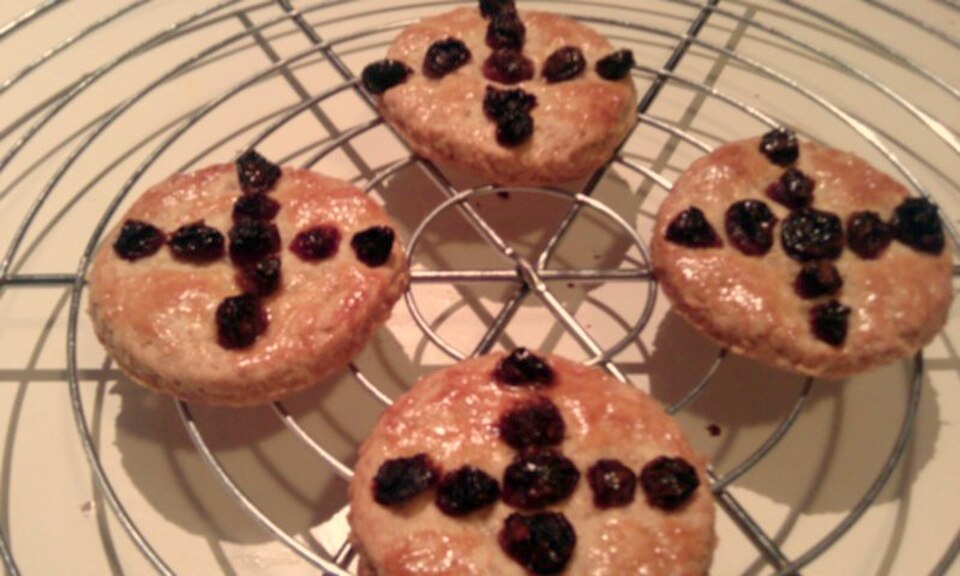
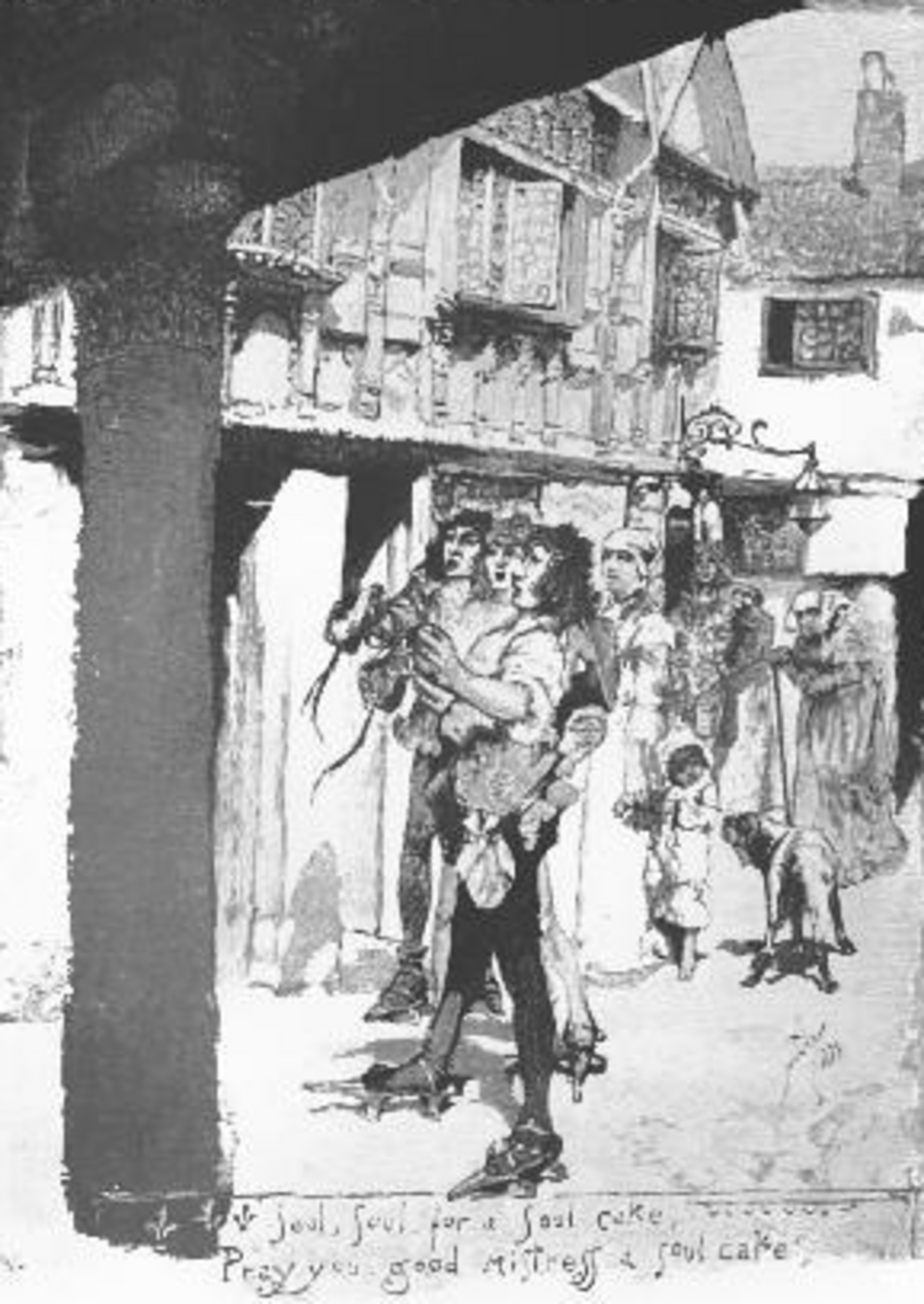
As Christianity spread and Samhain intertwined with All Saints' Day and All Souls' Day, this tradition laid the foundation for "souling." Children and the poor went door-to-door singing soul-rhymes and offering prayers for deceased loved ones in exchange for soul cakes—small, spiced round cakes baked with nutmeg, cinnamon, and raisins, typically marked with a cross on top. Each eaten cake was believed to represent a soul freed from purgatory, creating a direct historical bridge between ancient Irish door-to-door offerings and modern trick-or-treating.
Legendary Spirits of the Samhain Night
Irish folklore surrounding Samhain is rich with specific figures and terrifying specters that populated the dark countryside:
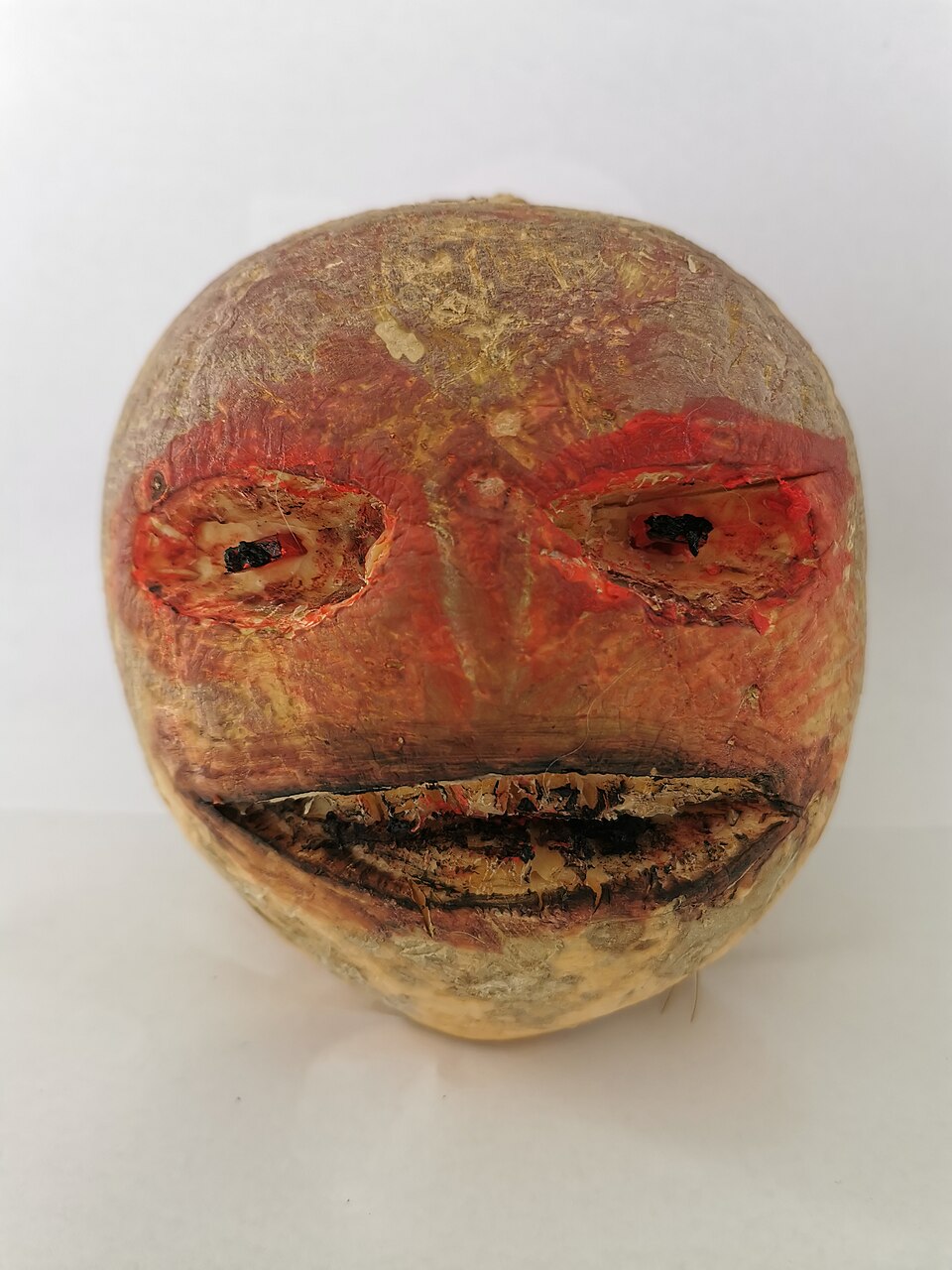
- Stingy Jack and the First Jack-o'-Lantern: According to legend, a cunning, deceitful blacksmith named Jack trapped the Devil twice through sheer Irish trickery. First, Jack convinced the Devil to turn himself into a silver coin to pay for their drinks, which Jack promptly shoved into his pocket alongside a silver crucifix, trapping the Devil until he promised not to claim Jack's soul for ten years. Second, Jack tricked the Devil into climbing high into an apple tree to pick a piece of fruit; while the Devil was up in the branches, Jack carved crucifixes into the bark all around the trunk, trapping him in the tree until the Devil swore he would never claim Jack's soul. When Jack eventually died, his sinful life barred him from Heaven, but the Devil, bound by his oath, refused him entry to Hell. Instead, the Devil tossed Jack a single burning ember from the fires of Hell. Jack hollowed out a turnip to house the glowing ember, condemned to roam the earth forever as "Jack of the Lantern." Long before bright orange pumpkins decorated front steps, families carved grotesque faces into hard turnips, rutabagas, and mangelwurzels, placing candles inside to scare away Jack and other roaming spirits.
- An Púca (un POO-kuh): A shapeshifting, nocturnal spirit often taking the form of a dark horse with glowing golden eyes, a goat, or a hare. The Púca was believed to roam the fields after Samhain, spitting on or spoiling any unharvested crops, making it taboo to gather berries or grain after October 31st.
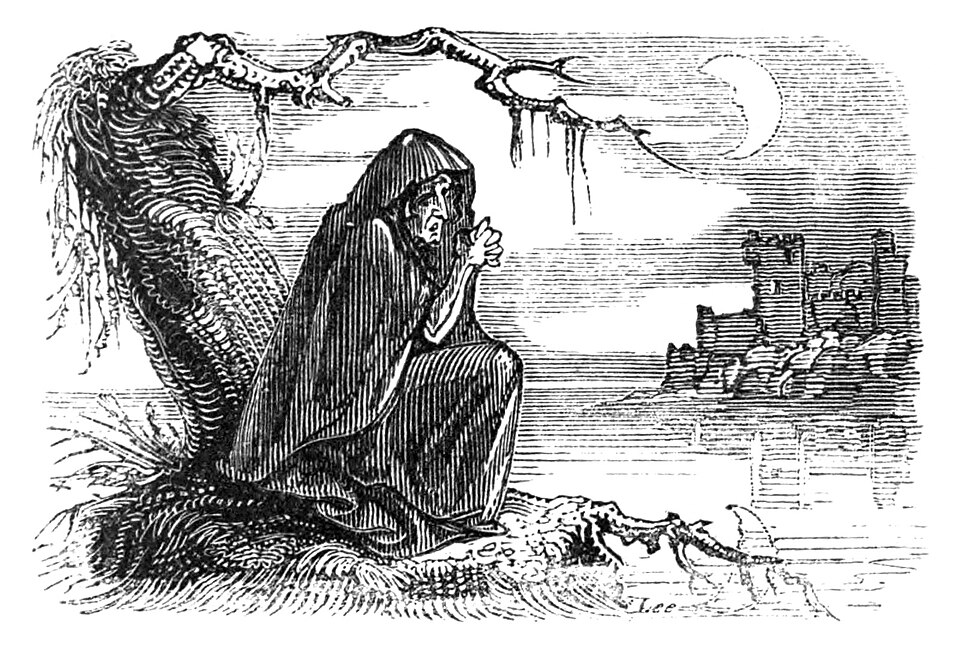
- An Bean Sídhe (un ban SHEE, The Banshee): The "woman of the fairy mounds," a supernatural female spirit whose piercing, mournful wail—the keening—was heard in the dead of night, foretelling the imminent death of a family member from ancient Irish lineages.
- An Dúlachán (un DOO-luh-kahn, The Dullahan): A terrifying headless rider who sped through the countryside on a black horse, carrying his own severed head aloft with glowing eyes. In folklore, the Dullahan held a whip made of a human spine and stopped at the gates of those marked to die, calling out their names to draw their souls away.
Baking and Fortune-Telling
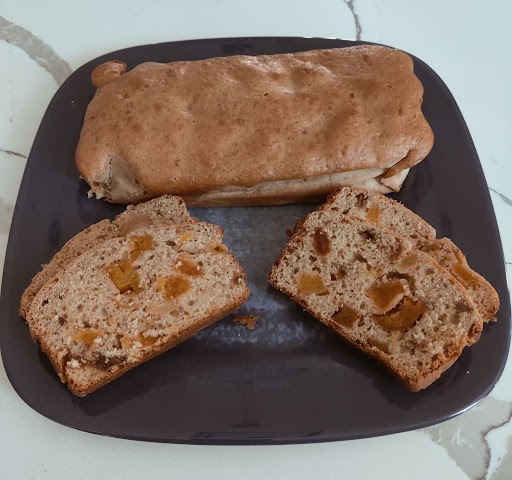
Inside the home, Samhain was a time for family games and peering into the future. Central to the evening was baking Báirín Breac (baw-REEN BRAK, meaning "speckled loaf," commonly spelled Barmbrack), a yeasted fruit bread containing hidden symbolic charms. Slices were distributed to family members to reveal their fortunes for the year ahead: a ring foretold marriage, a coin signaled incoming wealth, a piece of cloth warned of frugal times, and a small wooden stick cautioned against family squabbles.
Crossing the Ocean: The Irish Diaspora in America
During the mid-19th century, the catastrophic Great Famine—An Gorta Mór (un GUR-tuh MORE)—forced more than a million Irish men and women to emigrate across the Atlantic. Settling in urban centers across the United States—including port cities like Baltimore, Boston, Philadelphia, and New York—Irish immigrants brought few physical belongings, but carried their rich oral traditions, seasonal customs, and living folklore with them.
In their new American neighborhoods, these traditions adapted to local conditions:
- From Turnip to Pumpkin: Finding turnips scarce but native American pumpkins abundant, large, and far easier to carve, Irish newcomers adapted their lantern custom, creating the bright pumpkin jack-o'-lanterns that define autumn today.
- From Guising and Souling to Trick-or-Treating: The door-to-door rituals of guising and exchanging soul cakes merged with American harvest gatherings and neighborhood hospitality, eventually evolving into organized trick-or-treating by the mid-20th century.
- A Shared Cultural Legacy: Over generations, what began as an immigrant folk tradition became integrated into the wider American narrative, evolving into a universally celebrated holiday of creativity, storytelling, and community.
Preserving the Spark
Every time a candle flickers inside a carved lantern or a ghost story is shared on a crisp autumn evening, it connects modern traditions directly back to the hearths of ancient Ireland. The journey of Samhain to Halloween is a testament to cultural resilience—a story of how traditions cross oceans, adapt to new soils, and continue to illuminate our dark autumn nights.