I Am America: Order the Special, Drink the Near Beer, and Don't Eat the Shamrocks

As Americans, we love to celebrate our country as a grand culinary melting pot. We enthusiastically explore and distinguish the complex, distinct flavors that immigrant communities have brought to our shores over the generations—from the comfort foods of Europe to the vibrant spices of Asia, Africa, the Caribbean, and Latin America. We look at this massive tapestry of food and recognize it as a brilliant expression of heritage. Yet, when it comes to Irish food, that celebration completely stalls. In popular culture, Irish cuisine is rarely given that same culinary dignity; instead, it is often flattened into a once-a-year novelty or overshadowed by lazy stereotypes.
The reality is that nineteenth-century Irish-American food and drink traditions survived within a society moving at a terrifying velocity toward assimilation. By 1880, historical records show a staggering 50% drop in native speakers of the Irish language in America. This cultural compression hit public spaces hard; within a single generation, traditional communal practices like informal outdoor céilí dancing and street-corner folk music rapidly declined in urban centers as families scrambled to blend into the background.
But while public-facing cultural expressions were muted to appease the American mainstream, the heritage itself didn't vanish—it retreated to the only two spaces nativist authorities couldn't fully police: the private kitchen stove and the neighborhood barroom counter. Far from being spaces of quiet conformity, these environments became secret preservation chambers. Over generations, as families assimilated, many of these recipes stopped being made, and the intricate variety of the cuisine was lost to time. By looking closely at what was bubbling in the daily pot and what was poured beneath the floorboards, we uncover a story not of a culture that voluntarily dissolved, but of an underground heritage that stubbornly used hospitality to survive.
Part One: Market Stalls, Festive Platters, and the Scrambled Menu

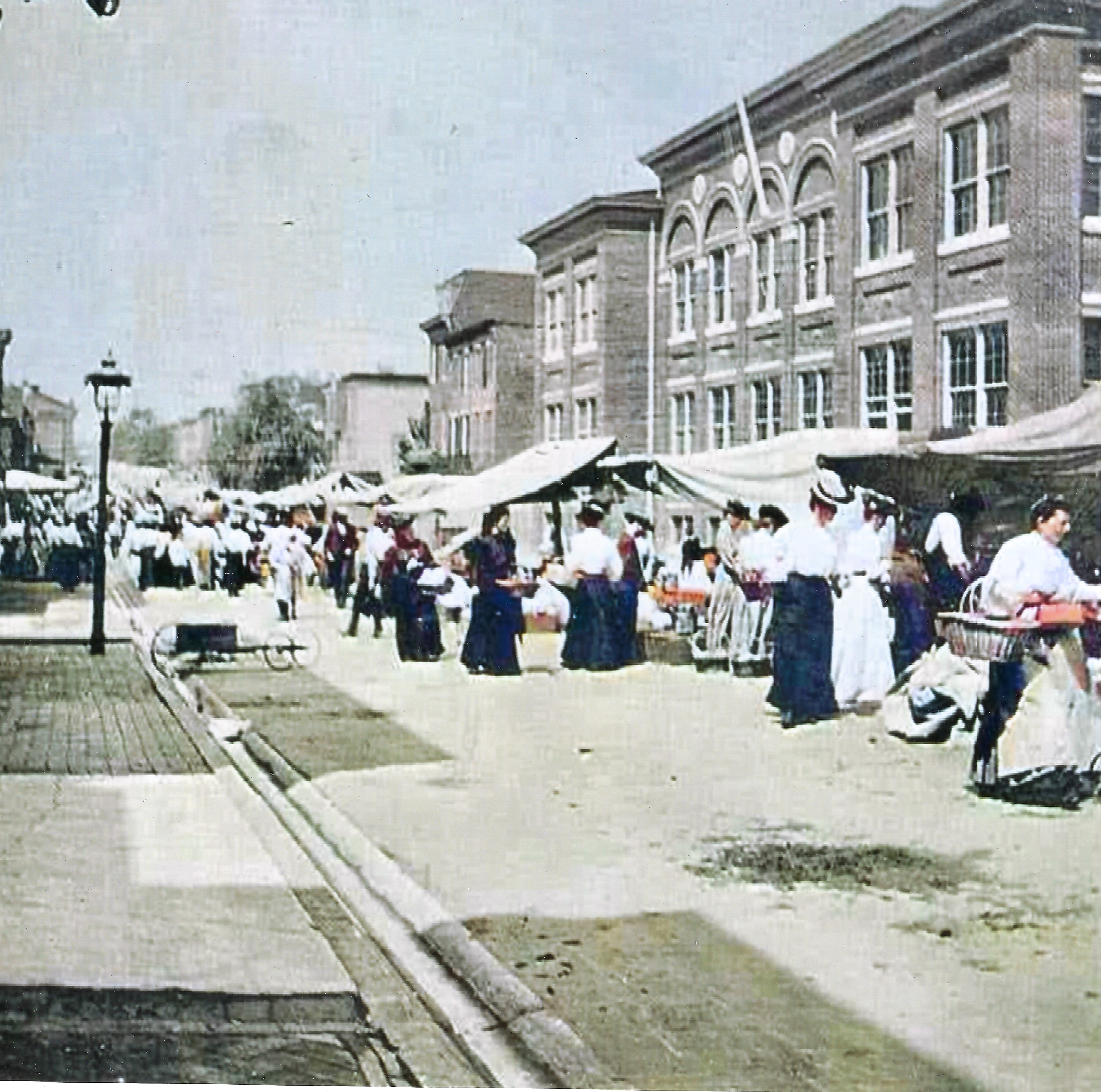
To find the authentic heart of Irish-American cooking, you have to look past the modern restaurant gimmick of corned beef and cabbage—an urban hybrid born more out of neighborhood geography than old-world tradition. When early waves of immigrants walked into municipal hubs like Baltimore’s historic Hollins Market—which continues to anchor our community today, especially with the return of the Farmers Market every third Saturday this year—they faced a food landscape strictly divided between public commercial convenience and private heritage.

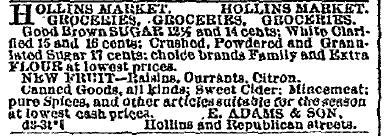
Step into that 19th-century market through old merchant records, and you’ll see the sharp line where American commerce tried to streamline immigrant diets. Holiday advertisements from Hollins Market show local merchants eagerly pushing sweet, standardized commercial goods; an 1868listing for E. Adams & Son boasts of festive winter arrivals of "Raisins, Currants, and Citron," while bakers like George Berger at Stalls 192-193 ran frequent ads for commercial "Paradise Fruit Cakes" and uniform pound cakes designed to save busy immigrant families the trouble of baking at home.
But while the commercial market pushed uniform sweets and standard cuts of soup beef for the daily pot, Irish kitchens maintained a completely different, unwritten culinary vocabulary behind closed doors. Because families couldn't easily replicate the specialized ingredients of the old country, baking and cooking became a masterclass in regional resourcefulness.
The real immigrant kitchen relied on a deep rotation of distinct, textured breads. There was Brown Wheaten Bread, a heavy loaf utilizing coarse whole meal flour and buttermilk to recreate the dense texture of rural hearths; Honey Oat Bread, which used local wild honey to soften the bite of raw grains; and Barmbrack, a rich yeast loaf heavily speckled with tea-soaked raisins and currants that was sliced thick and slathered in salted butter.
Alongside these forgotten loaves stood savory, slow-simmered dishes designed to stretch meager budgets without sacrificing flavor. Kitchens relied on Skirlie—a savory mixture of coarse oatmeal toasted in suet with plenty of chopped onions and black pepper—to make small scraps of meat last through the week. During strict religious periods, cooks turned to Good Friday Pudding, a spiced, egg-heavy baked custard bread used to break the Lenten fast.
The identity of festive pies also shifted in America. Traditionally, Cottage Pie was a working-class staple utilizing leftover minced beef under a rustic crust of mashed potatoes, named for the modest cottages of the rural peasantry and frequently served alongside festive dishes like Spiced Beef during winter gatherings like St. Brigid’s Day on February 1st. Shepherd's Pie, by contrast, was a distinct variation that required minced lamb or mutton, traditionally tied to spring flock management and saved for later spring celebrations like St. Patrick's Day on March 17th.
When massive commercial stockyards made beef incredibly cheap and abundant compared to lamb, American taverns began throwing leftover beef into every pan while labeling everything "Shepherd’s Pie" regardless of the season. This commercial distillation is exactly how the myth of corned beef and cabbage as an ancient Irish staple was born. In reality, giant slabs of corned beef brisket are an Irish-American invention born of urban necessity. Irish neighborhoods frequently overlapped with kosher Jewish immigrant enclaves; Irish cooks began buying affordable beef brisket from their Jewish neighbors, treating it with traditional Irish brining techniques to create the hybrid comfort food we know today.

These traditional recipes didn't vanish because immigrant cooks grew tired of them; they retreated inward, transforming into fiercely guarded family secrets passed down at private tables, keeping the authentic variety of Irish heritage alive away from the simplifying pressures of the American palate until the velocity of assimilation finally caused many of them to fade from common practice.
Part Two: The Saloon Floorboards and the Puck Caricatures
Just as the private kitchen stove preserved the flavors of home, the neighborhood tavern counter became the essential public fortress for the community, born out of a raw, physical necessity dictated by urban architecture. The housing available to the influx of Irish laborers—the cramped, dark, unheated, and poorly ventilated tenement rooms or alley houses—offered zero privacy and very little comfort. After an exhausting twelve-hour shift on the Baltimore & Ohio Railroad, the docks, or the canal lines, workers needed a place to simply congregate and connect.
The neighborhood pub filled that void, acting as the literal living room of the community. For the price of a cheap drink or a simple, hearty plate of food, a laborer bought access to a warm, stove-heated room. Far more than just a place to drink, the pub functioned as an informal mutual aid society, a polling place, a union hall, and an employment office. If a worker needed a job lead, they went to the pub where labor bosses frequently hired crews. If they needed to check the mail, secure a small line of credit from a sympathetic publican to cover rent, or join an immigrant benevolent society, the tavern counter was where those vital connections were made.

Because Irish laborers spent their scarce free hours congregating in these highly visible public spaces, mainstream nativist culture frequently misinterpreted these gatherings. Nativist publications like the famous Puck magazine weaponized this visibility, running vicious, cartoonish caricatures that flattened a sophisticated network of neighborhood survival into a negative stereotype. They drew the Irish with exaggerated, ape-like features, portraying them as inherently listless, wild, reckless, and rowdy—creating a derogatory cartoon archetype of the "Fighting Irish Paddy" disrupting society at the local pub.
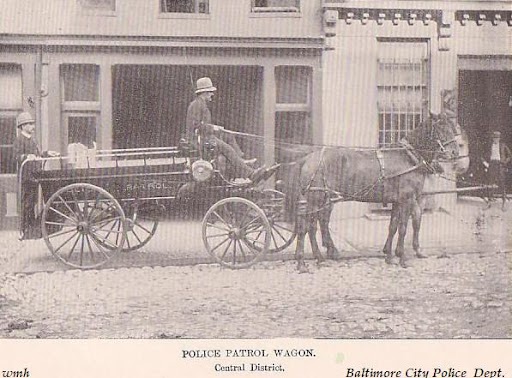
This targeted social stigma is exactly where the term "Paddy wagon" entered the American lexicon. Born directly out of anti-immigrant bias, the phrase pointed to the high volume of working-class Irishmen who were swept up and arrested at neighborhood taverns during targeted police crackdowns. It also captured a striking irony of the changing urban workforce: as the generations progressed, the police vans themselves were increasingly driven by newly hired Irish officers.
When Prohibition struck in 1920, this surveillance intensified, forcing the Irish pub completely underground and transforming it into a definitive space of cultural resistance. Rather than closing their doors, publicans adapted overnight, running covert bootlegging operations, operating hidden speakeasies, and serving low-alcohol "near beer" or illicit spirits in teacups on the second floor. The tavern floorboards became an economic and political powerhouse, utilizing the cover of clandestine gatherings to organize voters, launch labor unions, and climb into local political offices, permanently shaping the landscape of American urban politics.
Part Three: Living Monuments of Resilience
The true legacy of this culture is found in historic, unpolished spaces that survived these crackdowns, the temperance movement, and Prohibition by staying true to their original purpose as community sanctuaries. These institutions represent an incredible network of resilience, and they continue to operate today as living monuments to history.
.jpg)
In New York City, McSorley’s Old Ale House(established in 1854) remains open in Lower Manhattan, holding the title of the city's oldest continuously operated saloon. During Prohibition, McSorley’s survived by stubbornly refusing to lock its doors, instead serving a legal, low-alcohol "near beer" to its working-class patrons to keep the communal gathering space alive. With its sawdust floors, historic artwork, and insistence on cash-only service, it stands as a living artifact of raw, working-class utility.
Moving into the American Midwest, McGinley's Golden Ace Inn in Indianapolis is still proudly family-owned and operated ninety years after it first opened on March 1st, 1934—just a few months after the repeal of Prohibition. Founded by County Donegal immigrants John and Ann McGinley, family lore holds that Ann would stand at the window to watch the commercial beer trucks roll down Washington Street, counting the deliveries to figure out exactly which American brews were popular since they had spent the Prohibition years in Ireland. They even initially hid their ethnicity in the pub's name to avoid anti-Irish nativist backlash from the local Ku Klux Klan resurgence, briefly trying out the name Erin Go Bragh in 1937 before reverting back to protect their business. Today, it still serves skillet-cooked cheese burgers and hosts traditional, unplugged Irish music sessions.

In Philadelphia, McGillin’s Olde Ale House (opened in1860) is celebrating over 165 years of continuous business. Founded by William and Catherine McGillin, "Ma" McGillin famously ran the bustling kitchen upstairs, displacing her thirteen children to expand the dining space and prove that hot food and communal care were the true secrets to longevity. During Prohibition, she kept the business alive by hiring a chef to bake cakes and serve ice cream, ensuring the front door reopened as a saloon the moment repeal was signed.

We also recognize the historic site of Patrick’s of Pratt Street in Baltimore. Established in 1847 by Patrick Healy at the absolute height of the immigration following An Gorta Mór (The Great Hunger),Patrick’s operated under the continuous stewardship of the same Irish family for generations, earning renown as the longest-running family-owned Irish pub in America. The family kept the space free of cartoonish pop culture decor and, for the vast majority of its historic run, refused to open its doors on St. Patrick’s Day—viewing it as a holy day and refusing to cater to rowdy spectacles that reinforced harmful stigmas. Though the family sold the historic building in 2016, and it now operates as a different kind of neighborhood bar called The Backyard—which, while continuing to serve as a local gathering space, does not maintain the Irish heritage or identity of its predecessor—the building remains a testament to South Baltimore’s working-class history and the time when a simple bar counter served as a vital life support system for the immigrant community.
Conclusion: A Toast to the Underground Table
The next time you pull up a chair at a local neighborhood counter, remember that you are stepping into a social landscape that was fought for and preserved beneath the radar of mainstream America. The neighborhood tavern as a sanctuary of mutual comfort, and the concept of unpretentious, hearty hospitality, are direct inheritances of an immigrant people who refused to let the pressures of assimilation wipe out the core of who they were.
They adjusted their public menus to navigate abundant American markets, but they kept the heart of their most precious, traditional recipes beating in private. By looking past the shallow, commercialized stereotypes and rediscovering the rich history of multi-grain baking, slow-simmered comfort food, and resilient gathering spaces, we celebrate the real hands that kept this culture alive. Sláinte!
Bring History to Your Table: Spiced Tea Loaf (Barmbrack)
While this is often associated with special occasions, a traditional tea-soaked loaf was a staple of the home pantry—the perfect, sweet, and foolproof way to use up the last of the tea and dried fruit. It requires no complex baking techniques or precise measurements. It is dense, flavorful, and best enjoyed sliced thick with a heavy smear of salted butter.
Ingredients
- 2 cups mixed dried fruit (raisins, sultanas, and currants)
- 1 cup strong black tea, brewed and cooled
- 1 cup brown sugar
- 1 large egg, beaten
- 2 cups all-purpose flour
- 1 tsp baking powder
- 1 tsp mixed spice (or a blend of cinnamon, nutmeg, and allspice)
Instructions
- Soak the Fruit: In a large bowl, combine the dried fruit and the cold black tea. Let it soak for at least 4 hours (or overnight for the best texture).
- Preheat and Prep: Preheat your oven to 350°F (175°C). Grease and line a standard loaf tin.
- Mix: Stir the brown sugar and beaten egg into the fruit and tea mixture. Sift in the flour, baking powder, and mixed spice. Mix until just combined into a thick, sticky batter.
- Bake: Pour the batter into the prepared tin. Bake for 60 to 75 minutes, or until a skewer inserted into the center comes out clean.
- Serve: Let it cool in the tin for 10 minutes before turning it out onto a wire rack. Slice thick while still slightly warm and slather in cold, salted butter.