I Am America: Pass GO, Collect $200, and Forget My Name
The Irish American Visionary Behind the World’s Most Famous Board Game
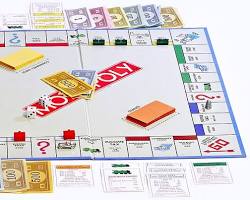
Source: Pixabay / Public Domain. While the modern Monopoly board is a household icon, its circular "continuous path "was first engineered and patented in 1904 by Elizabeth Magie.
If you’ve ever opened a Monopoly box, you’ve likely heardthe quintessential American success story of Charles Darrow. It is a staple of20th-century lore: an unemployed man during the Great Depression dreams up agame of high-stakes real estate on a piece of oilcloth to entertain his family,eventually becoming the first millionaire game designer in history.
It is a compelling story, but it is only half of the truth.
The game’s foundation was actually the brainchild of Elizabeth"Lizzie" Magie, a sharp-witted Irish American innovator who patentedher design thirty years before Darrow ever saw a board. Her story is afascinating example of the Matilda Effect—a historical phenomenon where thework of female innovators is often attributed to male colleagues or repackagedfor commercial appeal. While Darrow popularized the version we play today, Lizzie Magie was the one who engineered the game's heart.

Elizabeth Magie, inventor of The Landlord’s Game. Source: National Archives and Records Administration / Public Domain
The Mind of a Provocateur
Lizzie Magie was a pioneer who refused to be constrained by the social expectations of the early 1900s. Born in 1866 to a Scotch-Irish family of abolitionists, she inherited a fierce "Donegal grit" from her father, James Magie. A newspaper editor who had once traveled with Abraham Lincoln, James was a devotee of Georgism—an economic theory proposing that while people should own the value of what they create, the land itself should belong to the community.
Lizzie lived these ideals with theatrical conviction. She was a woman of rare independence, working as a stenographer and saving enough to buy her own home at a time when women were often treated as legal dependents. In 1906, she made headlines by placing a newspaper advertisement offering herself as a "young woman American slave" to the highest bidder. This was a sophisticated piece of performance art; by putting a "price tag" on herself, she forced the public to confront a legal system that afforded women almost no economic autonomy. She was an innovator who used her intellect to challenge the very structures of the American landscape.
Innovation: The Circular Revolution
In 1903, Lizzie set out to create a tool for social education. Her goal was to demonstrate the systemic flaws of land monopolies through play. Her solution was The Landlord’s Game, patented in 1904.

"The Landlord’s Game" board design, from U.S. Patent No. 748,626. Source: Elizabeth Magie / U.S. Patent and Trademark Office (1904).
Lizzie’s most significant innovation was the continuous path. Before her design, board games were linear; players moved from a start to a finish line. Lizzie’s circular board forced players to orbit the same market over and over, mirroring the repetitive cycle of rent and wages in real-world economics. Her original layout featured the "Go to Jail" corner, the "Public Park" (the ancestor of Free Parking), and the concept of collecting wages for passing the starting point.
To illustrate the human choices within an economy, she designed the game with two sets of rules:
- The Prosperity Rules: In this version, every player benefited whenever someone acquired a new property. The goal was for the community to flourish together.
- The Monopolist Rules: This is the cutthroat version we play today. The goal was to create monopolies and be the last one standing.
Lizzie intended for the Monopolist rules to serve as awarning. Ironically, the public found the "ruthless" version far moreengaging, and her message of shared prosperity was eventually eclipsed by thethrill of the win.
The 1924 Evolution: LegalPersistence
By the time Lizzie's original 1904 patent expired, herrevolutionary circular board had entered the public domain. This meant thatwhile the "continuous path" design was now free for anyone to use,Lizzie’s intellectual journey was not over. In 1924, she secured a secondpatent (No. 1,509,312).
Because she could no longer claim the board shape itself, her 1924 patent focused on refined technical mechanics and new game components. While she navigated these updates, the game was evolving in the real world as a "folk game." It spread through Quaker circles and college campuses where players added local street names like Boardwalk and Park Place. It was this evolved, community-modified version that was eventually introduced to Charles Darrow in 1932. He saw the potential of the game Lizzie had built, added his own design flourishes, and successfully sold his version to Parker Brothers in 1935.
Reclaiming the Landmark

Lizzie Magie in 1936, holding her original game board alongside the newly popularized Monopoly. Source: Library of Congress /Chronicling America. Originally published January 1936.
When Parker Brothers realized they had a hit on their handswith Darrow’s version, they recognized the need to protect their investment. Toprevent competitors from using Lizzie's active 1924 patent, they purchased itfrom her for a flat fee of $500. While it was a willing and legal transaction,it meant that the official history of the game became focused on Darrow’sDepression-era success story, while Lizzie’s name and her originalanti-monopolist intent became a footnote.
To this day, the game's packaging continues to spotlight the1935 narrative. Lizzie Magie’s invention did not save lives like a fire escape or revolutionize industry like the steam engine, but it did something equally profound: it changed the American social landscape. It created a shared cultural landmark of "Go" and "Free Parking" that has branched into thousands of versions across the globe.
We share her story not as a new discovery, but as a necessary acknowledgment of the Irish American grit that helped shape our collective identity. Lizzie Magie provided the board upon which the American imagination still plays, and this month, we honor the mind that wrote the rules of the game.