I Am America: Reels, Records, and Royal Roots
There is a distinct sound that can cut through the roar of a bustling metropolis, a piercing, lonesome, yet utterly exhilarating melody that feels both entirely new and ancient beyond reckoning. In the early decades of the twentieth century, as waves of immigrants arrived on American shores seeking refuge, labor, and a foothold in a rapidly industrializing nation, they brought with them more than trunks and work boots. They carried the tunes of the old country locked away in their memories and fingertips. Across generations, that transatlantic sonic bridge was built and sustained by distinct pillars of preservation—scholars, performers, and global patrons who ensured through meticulous, dedicated work that traditional Irish music would survive and flourish in America.
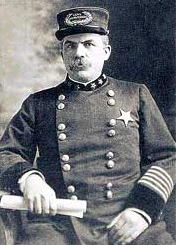
Francis O'Neill: The Chicago Chief Who Anchored the Notes in Print
Long before commercial recording captured the soundscape of Irish America, traditional music lived almost entirely in oral tradition—fragile and vulnerable to fading away with each passing generation. Enter Francis O'Neill, an immigrant from County Cork who arrived in the United States after working as a sailor and ultimately settled in Chicago, where he joined the police force in 1873. Through sheer grit, O’Neill climbed the ranks to become the General Superintendent (Chief) of the Chicago Police Department.
Yet, his most enduring historical contribution happened off the clock. A gifted traditional musician himself on the flute, fiddle, and pipes, O’Neill recognized that the old tunes were slipping away. He actively tracked down master musicians, recruited talented players into his own police department to transcribe alongside him, and painstakingly notated thousands of melodies by hand. His landmark published collections—including O'Neill's Music of Ireland in 1903 (containing 1,850 tunes) and The Dance Music of Ireland (commonly known as 1001 Gems) in 1907—rescued countless reels, jigs, and airs from oblivion. O'Neill's rigorous editorial work built the foundational blueprint, ensuring that the structural architecture of Irish music remained intact for future generations to study and play.
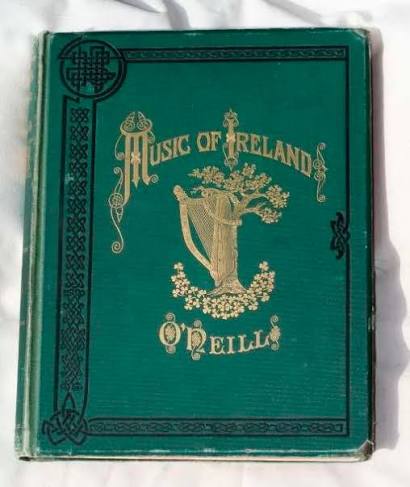
Michael Coleman: The Sligo Fiddler Who Sparked the Golden Age on Shellac
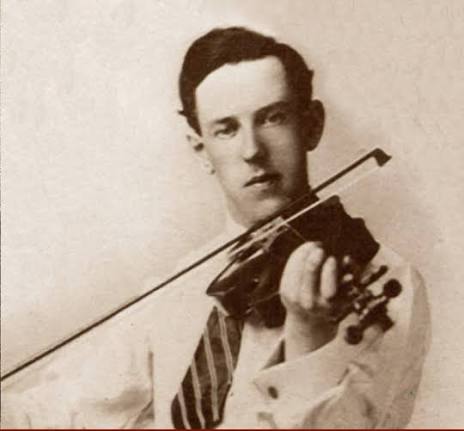
While O'Neill saved the notes on paper, Michael Coleman brought them roaring to life through the modern miracle of recorded sound. Born in Killavil, County Sligo, in 1891, Coleman grew up steeped in a regional style of fiddling noted for its speed, lift, and elaborate ornamentation. In 1914, seeking opportunity across the Atlantic, he boarded a ship bound for the United States, navigating the grit of immigrant life in New York while holding fast to his true vocation.
The 1920s commercial revolution for ethnic music provided Coleman his defining platform. When he walked into New York recording studios—beginning with landmark 78 RPM sessions for labels like Columbia in late 1921 (released in 1922) and Vocalion—he forever changed the landscape of traditional music. Over a recording career spanning from 1921 to 1944, fresh batches of his shellac discs arrived in port cities across the United States and made their way back across the ocean to Ireland, where they were treated like sacred texts. Coleman didn't just record tunes; he standardized repertoires and established global stylistic benchmarks, serving as the master artist who popularized the Golden Age of Irish music on American soil.
Princess Grace: The Royal Patron Who Secured Global Stewardship

While O'Neill preserved the tunes in print and Coleman immortalized them on shellac, the late twentieth century required a different kind of cultural stewardship to secure the legacy of Irish arts on the world stage. That mantle was championed globally by Grace Kelly—Princess Grace of Monaco—whose proud Irish-American heritage from Philadelphia connected her deeply to the cultural heartbeat of the old country.
Beyond her legendary cinematic career, Princess Grace maintained a lifelong passion for Irish arts, literature, and music, actively collecting rare manuscripts, texts, and traditional sheet music. Following her passing, her vision of cultural preservation culminated in the establishment of the Princess Grace Irish Library in Monaco, founded in November 1984 by her husband, Prince Rainier III. Built around her personal collection of literature and Irish-American sheet music, the institution grew to house over 9,000 books and scores, sponsoring lectures by luminaries like Seamus Heaney and providing residential literary bursaries. It proved that international patronage was just as vital to keeping the transatlantic tradition alive as the police beat or the recording studio.
An Enduring Legacy Across Time
From the meticulous handwritten anthologies compiled by a Chicago police chief to the crackling 78s cut by a Sligo fiddler in New York, and onward to the global literary sanctuary established by a Hollywood princess turned royal patron, traditional Irish music survived against all odds.
In the tapestry of the immigrant experience, stories are told not only through ledgers, legislative acts, and brick-and-mortar museums, but through the cadence of a tune passed down from ear to ear. Through ink, shellac, and international curation, Francis O'Neill, Michael Coleman, and Princess Grace each forged an indispensable path—giving equal weight to the preservation, performance, and patronage that gave voice to the yearning, resilience, and unyielding spirit of Irish America.