Sown in Irish Shadows: Stolen Children, Sold Labor, and the Rise of the Free-Born Rebel

To understand the 18th-century Irish experience, you must look into the dark corners of the British Colonial ledger—the places where the "Seeds of a Nation" were first buried. While history often focuses on the sunlight of the Great Founders, the true American identity was sown in the shadows: in the holds of ships, the backrooms of auction blocks, and the mud of the frontier.
These seeds were scattered by a storm blowing from across the sea. In the early 1700s, British policies like the Penal Laws and Enclosure Acts stripped the Irish of their soil, turning an entire people into a "surplus" population. The Crown didn't see humans; they saw cargo to be exported to the colonies to generate profit or serve as a human shield against the wilderness.
The Trade in "Spirits": The Stolen Children
The journey often began with theft. In the 1660s, the streets of Dublin were haunted by "spirits"—gangs who kidnapped Irish youth to sell into the tobacco colonies. This wasn't just a campfire story; it was a systemic trade so pervasive that the Lord Mayor of London was forced to petition the King in 1664 to stop the snatching of children. These were the first seeds planted in the dark: boys and girls who vanished from one world only to reappear as a line item on a Virginia plantation.
The Redemptioners: Betting on a Ghost
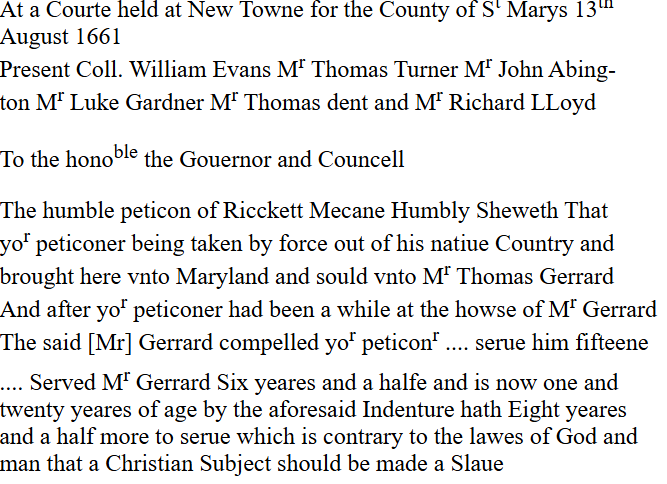
Not everyone was stolen; some arrived as Redemptioners, hopeful seekers who boarded ships without a penny, betting their lives that they could find a "redeemer" to pay their passage upon docking. If no one came, they were auctioned to the highest bidder. We see the cold mechanics of this gamble in the Blank Indenture Forms of the era—printed contracts where a person’s future was traded for "Meat, Drink, Apparel, and Lodging."

For orphans like O’Brien siblings in 1764, the gamble ended in tragedy. When their parents died at sea, the "freight debt" for the voyage fell on their small shoulders. Maryland General Assembly records show that the moment these orphans touched what would be American soil they were "bound out" for fourteen years according to the 1654 law. They weren't met with sympathy; they were met with a bill, bartered away to pay for the ship that had carried them into a new kind of loneliness.
The Frontier Sovereignty: Corn Rights and Cabin Smoke
For those who survived their terms—or arrived as Free Irish fugitives—the struggle shifted to the soil. John Lewis arrived in 1732 as a man with a price on his head, having killed an oppressive landlord in Ulster. He didn't ask the Crown for land; he pushed into the Virginia backcountry and established "Corn Rights." As seen in the Augusta County Order Books and the early surveys of the "Irish Tract," this was a gritty, unauthorized sovereignty. To the elite in Williamsburg, Lewis was a squatter. To the Irish, he was a king. They believed that if you planted the corn and built the cabin, the land was yours by the right of your sweat—a direct, defiant middle finger to the English land-grant system.
The Defiant Accent: Thomas Butler
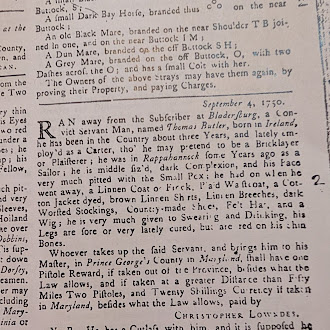
The colonial system attempted to track every "parcel" of Irish labor, but they couldn't scrub away the identity. On September 4, 1759, Thomas Butler escaped his master and vanished into the Maryland woods. The advertisement in the Maryland Gazette described him as having a "born in Ireland" and a "very much pitted with the Small Pox." That brogue was his armor. That redness on his legs was the evidence of his work, and that accent was the evidence of his soul. He chose to be a phantom in the shadows rather than a piece of property on a ledger.
The FinalRebuke: The Congressman Sold for Bulls
.jpg)
This persistent defiance eventually moved from the woods to the halls of power. Matthew Lyon, who was famously sold as a boy for a "pair of bulls," eventually became a Congressman. His enemies never forgot his "low-born" Irish roots, mocking him as "the wild Irishman" and jailing him under the Sedition Act of 1798 for speaking his mind.
But the seed had taken too deep a root. Lyon won his re-election from a jail cell. The "Congressional Pugilists" cartoons of the time show him fighting back with fire tongs, a visual testament to a man who refused to stay in the shadows. His 1822 Estate Inventory—listing his forge, his newspaper, and his land—is the final material rebuke to a system that had once valued him as nothing more than livestock.
The Irish experience in early America was a transformation through friction. They were the seeds that were never meant to bloom, yet they took over the garden. From the auction blocks of the 1750s to the halls of power in the 1790s, they used the very tools of their hardship to build a nation that was just as loud, defiant, and unyielding as they were.
All records obtained through the Maryland State Archives with the exception of the Illustration of Matthew Lyon which was obtained through the Collection of the United States House of Representatives.